Research

Deep Market Research.

In-depth reports and analysis on the robotics industry — funding trends, component supply chains, and technology readiness across the sector.

Rare earth magnet supply chain for robotics actuators

Rare-earth magnet supply remains a live constraint for actuator and motor builders, with export licensing, scarce heavy rare earths and tariff/geopolitical risk expected to keep lead times and price premiums elevated through 2026. The key regulatory watch item is China's suspension of its October 9, 2025 export-control package (Announcements Nos. 55, 56, 57, 58 and MOFCOM Nos. 61 and 62, including the 0.1% Chinese-origin de minimis rule for foreign-made magnets), enacted by MOFCOM/GAC Announcement No. 70 of 2025 and running from November 7, 2025 to November 10, 2026. These measures are not 'scheduled to take effect' in November 2026. They are paused as part of the US-China agreement following the Xi-Trump meeting, and could be extended, allowed to lapse into force, or re-imposed, so the binary risk date is November 10, 2026.


Edge AI compute modules for robotics (NVIDIA Jetson Thor class)

Six-axis force-torque sensors remain standard equipment on high-performance humanoids, mounted at wrist, ankle, sole and hand for balance and contact-rich manipulation, with the supplier field split between European specialists (Bota Systems) and Chinese sensor houses (SRI, Hypersen). The framing of F/T as materially less supply-constrained than tactile no longer holds as stated: tactile sensing has scaled into commercial dexterous hands during 2026. No verifiable last-60-day pricing or capacity disclosure was retrieved for the F/T category itself.

Dexterous robotic hands and tactile sensors

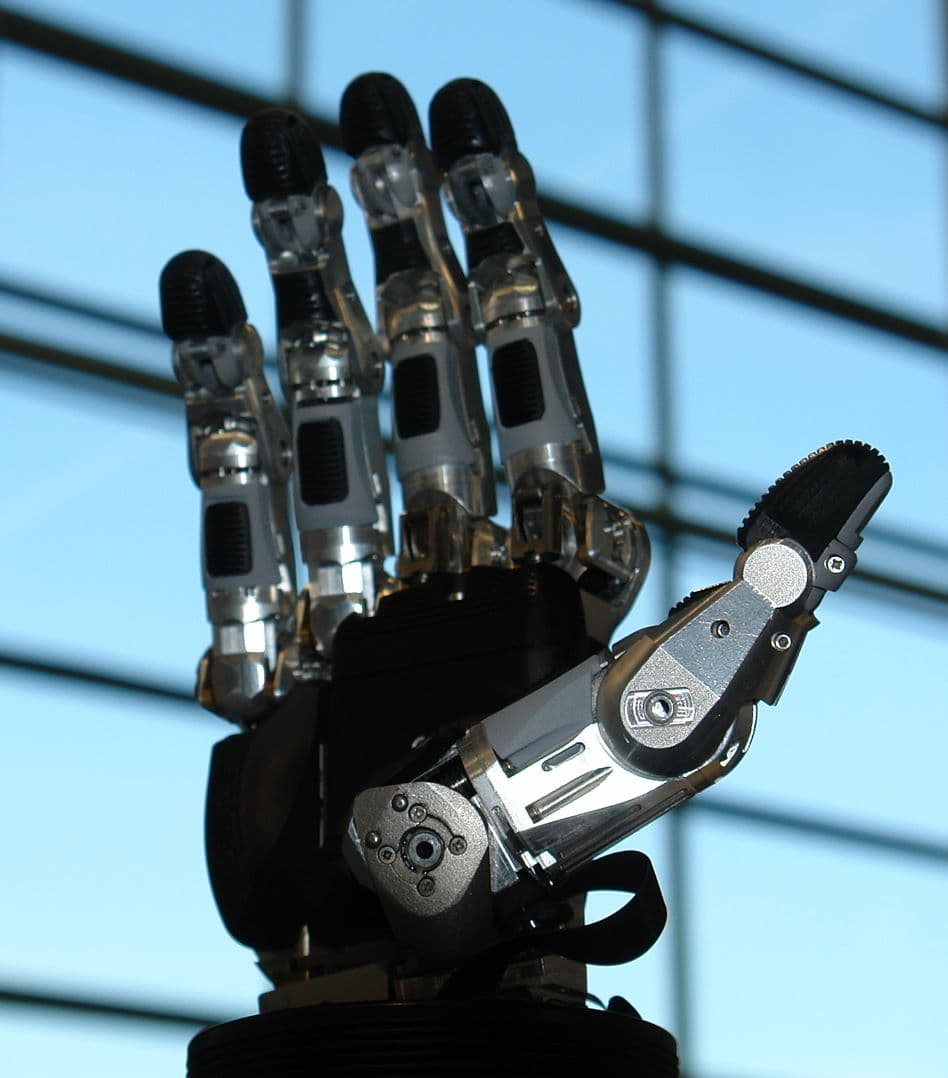
Tactile sensing has moved past the demonstration stage seen at CES 2026 and is now being adopted as standard equipment in commercial dexterous hands, particularly in China, where penetration in dexterous robotic hands is reported to have risen above 60% as of late 2026. Full-hand, dense multi-axis sensor coverage remains the technical direction, with vendors such as Ensuring Technology and XELA Robotics shipping integrated solutions, and semiconductor players such as Analog Devices developing multimodal tactile prototypes. The earlier characterization of tactile as having no commercial-scale supply is no longer an accurate description of the current market.

Harmonic drive and cycloidal gear actuators

Chinese strain-wave (harmonic) reducer makers are taking share from Japanese incumbents on the back of humanoid demand, with Leaderdrive posting sharply higher 2025 revenue and profit. On the cycloidal side, Nabtesco is expanding RV-reducer capacity and has launched new compact precision gear lines explicitly aimed at cobot and humanoid joints. Note: the strongest sourcing I could retrieve dates to Dec 2025–Jun 2026, slightly outside a strict 60-day window.

Exoskeleton market for industrial and medical use

Exoskeletons remain a much smaller and slower-compounding market than humanoids, with the key 2026 unlock being reimbursement rather than technology. Updated sizing published August 5, 2026 puts the total exoskeleton market at $3.7B in 2026 growing to $20.3B by 2035, while medical-only estimates from other firms are two orders of magnitude smaller, a scope discrepancy worth flagging before any of these numbers are used. The most material recent change is Medicare Advantage coverage additions for personal exoskeletons in the US.

Warehouse and logistics robotics deployment economics

Deployment economics are consolidating around sub-two-year AMR paybacks and RaaS pricing that lowers total cost of ownership, but venture interest has cooled sharply relative to other robotics segments even as incumbent revenue grows. PitchBook's Q2 2026 data shows logistics & warehousing funding down 68% from Q1, and Amazon's February 2026 retirement of its Blue Jay multi-arm system is a useful reminder that headline deployments do not always survive contact with operations.

China humanoid robotics industrial policy and subsidies

China has moved from strategy documents to demand-side mandates: a June 2026 directive requires local governments and state-owned enterprises to test and adopt embodied AI, layered on a national real-world training initiative targeting 10,000+ deployed units by end-2026. Reporting from the last week of August, however, highlights how dependent the sector's revenue is on subsidies and state-linked demand, with industry participants expecting Beijing to narrow support and trigger consolidation in late 2026 or 2027.

Humanoid robotics funding and investment trends

Robotics and physical-AI venture funding set a fresh record in Q2 2026, and full-year 2026 has already surpassed all of 2025 with several months left. Capital is heavily concentrated in a handful of megadeals, with median round sizes now in the nine figures, while deal count is actually falling, a classic late-cycle concentration signal. Within the last 60 days the notable new datapoints are the PitchBook Q2 tally and a $152M Series A for U.K.-based Humanoid.

Robotics foundation models and embodied AI research

The last 60 days saw the field's centre of gravity shift toward open-weight, cross-embodiment models and toward the data infrastructure that feeds them. Xiaomi open-sourced its Xiaomi-Robotics-1 embodied-AI foundation model on August 5, 2026, following a July preview, and a steady stream of generalist policy models (Physical Intelligence's pi-0.7, ACE-Brain-0.5, Embodied-R1.5, Hy-embodied-0.5) is now being published and cross-cited in preprints. Capital is following: Physical Intelligence was among the largest robotics financings of Q2 2026.

Get notified about new entries.